
"tree often"
9000 article(s) found

Colombia Hui Lan coffee beans grinding graduation processing method taste variety origin introduction
Colombia coffee varieties are mainly small coffee. Plants are small trees or large shrubs, 5-8 meters high, usually multi-branched at the base; old branches are gray, nodes expand, young branches glabrous, compressed. Leaves thinly leathery, ovate-lanceolate or lanceolate, 6-14 cm long, 3. 5 -5 cm wide, apex long acuminate, acuminate part 10-15 mm long, base cuneate or slightly obtuse, rarely rounded, entire or rounded

A brief introduction to the treatment method of grinding degree and baking degree of Yemeni boutique coffee beans with unique flavor
The origin of these trees is Ethiopia. Yemen is the first country in the world to produce coffee on a large scale as a crop. Today, Yemeni coffee farmers still produce coffee in the same way as they did 500 years ago. Coffee berries grow naturally on trees, without any artificial fertilizers or pesticides, receive a small amount of rain and fog on the hillside in summer, blossom and bear fruit.

Indonesian Musk Cat Poop Coffee Flavor Taste Manor Introduction
Civet nature lonely, nocturnal, alert nature, hearing and smell are very sensitive, nocturnal, agile action, sensitive hearing, cunning suspicious nature, so called fox cat. During the day, they hide in shrubs, bushes, tree holes, earth caves and rock caves. They start to move in the morning and dusk. They often feed near forest edges, agricultural land, valleys and even residential areas. After two or three hours, they return to their habitats.

Introduction to Columbiana Linglong Coffee Flavor description method
The main varieties of Colombian coffee are small grains of coffee. Plants are small trees or large shrubs, 5-8 m tall, usually much branched at base; old branches gray-white, nodes dilated, young branches glabrous, compressed. Leaves thinly leathery, ovate-lanceolate or lanceolate, 6-14 cm long and 3.5-5 cm wide, tip long acuminate, acuminate part 10-15 mm long, base cuneate or slightly obtuse, rarely rounded, entire or

Description of taste and flavor of coffee beans produced in Colombian Hope Manor by variety treatment
Colombia hopes to describe the taste and flavor of the vineyard coffee beans produced by the variety treatment method. Colombia's suitable climate provides a real natural pasture for coffee. Coffee trees in Colombia are mainly cultivated in the Andes, on steep slopes about 1300 meters above sea level, where the annual temperature is about 18 degrees Celsius, annual rainfall is 2000 to 3000 millimeters, and latitude 1-1.

What boutique coffee beans are there in Yemen?
For more information on coffee beans, please follow the coffee workshop (Wechat official account cafe_style) Mokamadali (Mokha Mattari): the most famous coffee market name in the province of Mardali, west of the Yemeni capital Sanaa (another word is Bany Mattar). It is coffee produced at high altitude and usually has good red wine.

The distribution of coffee trees all over the world
In addition to location, there are many other factors that affect the quality of coffee: planting methods, soil fertility, weather, especially rainfall and light, and exact latitude. The above factors combined with the treatment of raw coffee beans have created the diversity of coffee from different countries and regions in the world. The comprehensive factors are very complicated, and often appear in the same plantation.

Introduction to the flavor description of Colombian Yi coffee and the characteristics of varieties
The main varieties of Colombian coffee are small grains of coffee. Plants are small trees or large shrubs, 5-8 m tall, usually much branched at base; old branches gray-white, nodes dilated, young branches glabrous, compressed. Leaves thinly leathery, ovate-lanceolate or lanceolate, 6-14 cm long and 3.5-5 cm wide, tip long acuminate, acuminate part 10-15 mm long, base cuneate or slightly obtuse, rarely rounded, entire or

Introduction to the description of Manor Flavor by Columbia Coffee Bean Grinding scale
After maturity, Colombian coffee beans have a reputation for flawlessness and elegance like jade in the jade world, with heavy particles, rich nutrition, rich flavor, soft taste, smooth taste and excellent balance; the color is as clear and transparent as emerald emerald; when it comes to the mouth, it makes people uncontrollably play with the emerald.

Coffee taste is used as a word for coffee taste.
Coffee trees are very similar to laurel and usually grow between the Tropic of Cancer and the Tropic of Cancer. A coffee tree usually grows for about three to four years before it begins to bear fruit. The fruit is a red berry, which is dried and the pulp is removed to separate the coffee beans. There are shadows of coffee beans all over the world, and they can grow as usual as long as the climate is right. These are suitable for cultivating coffee.

Introduction to the flavor and taste of Colombian coffee with boutique coffee bean manor
The main varieties of Colombian coffee are small grains of coffee. Plants are small trees or large shrubs, 5-8 m tall, usually much branched at base; old branches gray-white, nodes dilated, young branches glabrous, compressed. Leaves thinly leathery, ovate-lanceolate or lanceolate, 6-14 cm long and 3.5-5 cm wide, tip long acuminate, acuminate part 10-15 mm long, base cuneate or slightly obtuse, rarely rounded, entire or

What is organic coffee beans Organic Coffee organic coffee
In many parts of the world, growers use pesticides to control the growth of coffee pests, and moist and foggy coffee at high altitudes are more vulnerable to fungi, so growers often use pesticides to treat them. Many people believe that coffee can be called organic coffee as long as synthetic pesticides, herbicides and chemical fertilizers are not used during coffee growth. in fact, it is only in third parties (except coffee makers and producers).

Definition of Coffee Tree basic knowledge of Fine Coffee
Coffee trees are evergreen shrubs with slender trunks and many branches. In order to facilitate harvesting, coffee trees on the farm are usually maintained at about 1.5 meters. Wild coffee trees may grow to seven or eight meters, or even as high as 10 meters. After the coffee is planted, it will take about five years to grow, blossom and bear fruit for the first time for farmers to harvest. In this long five years, the seeder can only expect; the burden of the backlog of funds.

Brief introduction of organic coffee beans three famous coffee beans
Introduction to organic coffee beans in many parts of the world, growers use pesticides to control the growth of coffee pests, and moist and foggy coffee at high elevations are more vulnerable to pests, so growers often use pesticides to treat them. Many people think that coffee can be called organic coffee beans as long as synthetic pesticides, herbicides and chemical fertilizers are not used during coffee growth. in fact, only in third parties.

Introduction to Fine Taste treatment of Coffee Bean Grinding scale varieties in Columbia Hope Manor
Columbia Hope Manor Coffee Bean Grinding scale varieties taste treatment boutique introduction Colombian coffee varieties are mainly small-grain coffee. Plants are small trees or large shrubs, 5-8 m tall, usually much branched at base; old branches gray-white, nodes dilated, young branches glabrous, compressed. Leaves thinly leathery, ovate-lanceolate or lanceolate, 6-14 cm long, 3.5-5 cm wide, tip long acuminate

What are the main varieties of coffee? what are their advantages and disadvantages? what are the coffee cherries?
In the commercial coffee industry, there are two important varieties of coffee, Arabica and Robusta. In fact, there are three main types of coffee beans: Arabica beans, Robbota beans and Liberika beans. Although there is no clear name for Arabica coffee, the discrimination of coffee species is the most basic way to distinguish coffee. When it comes to coffee plants, you may be surprised by these figures. The

Description of Ugandan Coffee Flavor in mild and simple taste introduction of fine coffee varieties
Uganda is the country of origin of coffee grown in Robusta, but commercial cultivation of Arabica species here did not begin until early 1900. Today, there are still a large number of wild robusta coffee trees in Uganda, which is rare in cities in the world. As a landlocked country, the large coffee cultivation in Uganda is often interplanted, where coffee trees are mixed with food crops and rubber trees.

Introduction of major coffee producing areas in the world Central and South American coffee beans, African coffee beans, Asian coffee beans
[introduction] Coffee comes from coffee beans, which are harvested and processed from the fruit of trees. Coffee trees grow at the center of the equator, between latitudes of 25 degrees south and north, and are called coffee belts in the homes of tropical or subtropical countries. at present, raw coffee comes from coffee beans, which are harvested and processed from the fruits of the trees. Coffee trees grow at the center of the equator.

A brief introduction to the planting market price of Yemeni boutique coffee bean varieties with endless aftertaste
Yemeni coffee origin: Yemeni bean-shaped berry coffee beans (Peaberrybean): this coffee bean is smaller and rounder than most coffee beans and looks like peas, sometimes called mocha coffee beans. The shape of mocha coffee beans is similar to that of Ethiopia's Harrar coffee beans.
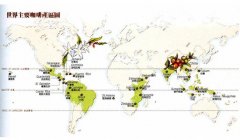
Coffee growing belt
Most of the coffee producing areas in the world are located in the tropics between the Tropic of Cancer and the Tropic of Cancer, which we call the "coffee belt" or Coffee Belt or Coffee Zone in English.